

YPAK × GIESEN: Embalagens de Café Co-Marcadas e Representação na Grande China
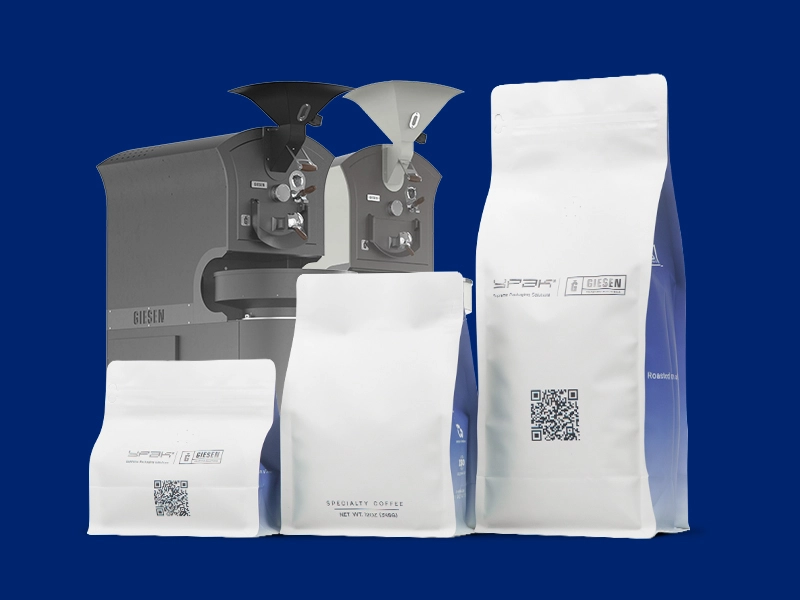
One partner for the roaster you buy and the bag you sell.
01 — THE PARTNERSHIP
Why a Roasting Machine Maker Put Its Name on a Coffee Bag
A packaging supplier can describe its own quality all day. What it cannot do is decide whose name goes on the bag. GIESEN builds coffee roasting machines — from handcrafted roasters to fully automated industrial systems — and describes its own work simply: precision engineering, built to elevate every roast, in the market since the 1980s. Roughly thirty million cups of coffee a day are roasted on its machines. That name now also appears on a coffee bag. Projetos YPAK, prints and converts it.
The test a co-branded bag has to pass
Uma bolsa com dois nomes precisa atender a dois conjuntos de padrões ao mesmo tempo.
Padrão 01
The roaster's standard:
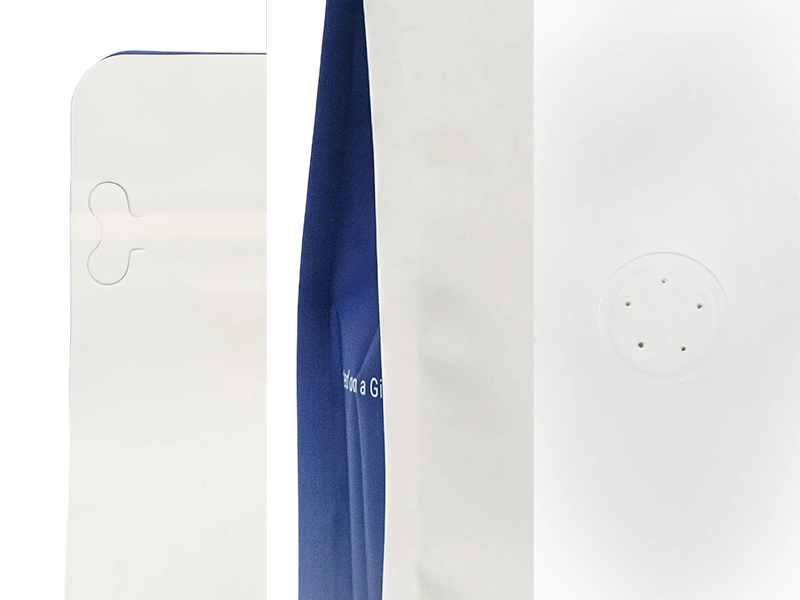
Desempenho em barreiras, Integridade do selo, Desgaseificação, Vida útil, and how the bag behaves on a real filling line.
Padrão 02
The equipment maker's standard:
consistent print, consistent construction, consistent delivery — batch after batch, because whatever ships alongside the machine reflects on the machine.
Neither of those is a marketing question. Both are production questions, and both are answered before anything is printed.
02 — ENGINEERING THE BAG
What Your Roaster Tells Us About Your Bag
Most packaging decisions start from a design. Ours start from a machine.
Because YPAK works with GIESEN on the packaging supplied with its machines, and is GIESEN's general agent for Greater China, we are in the room when machine output, batch behaviour and filling conditions are being discussed. That changes the questions we ask — and the order we ask them in.
Four questions we ask before a specification exists
01 How many bags does one roast fill?
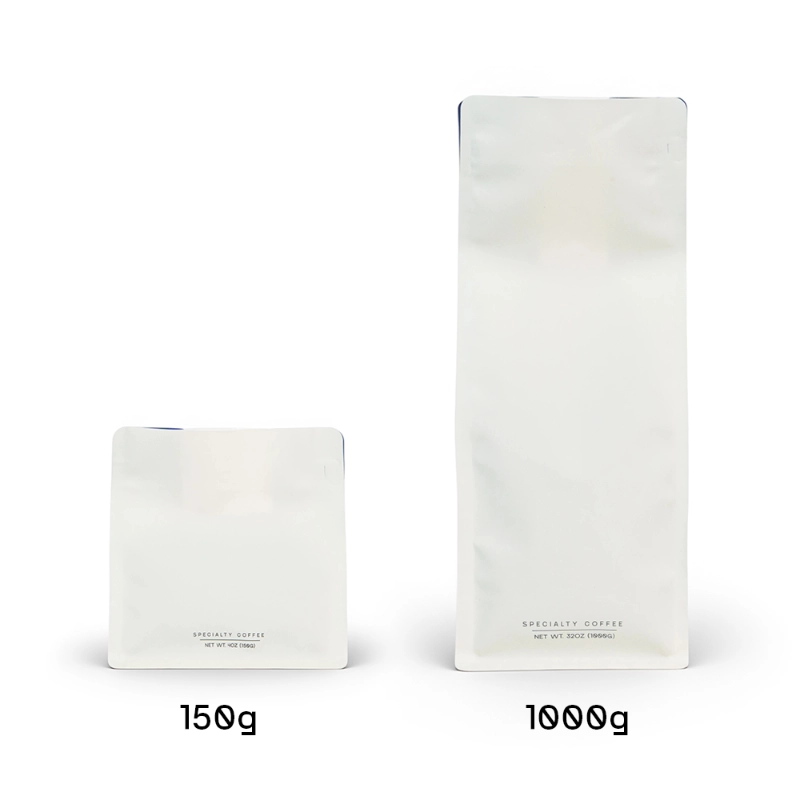
A production roaster does not roast one bag. It roasts a batch, and that batch has to divide into retail units cleanly. When the batch-to-bag ratio lands on a whole number, you cut giveaway, shorten weighing time and stop losing beans at the tail of every roast. When it does not, you either oversize the bag or underfill it — and you pay for that on every production day, not once.
02 What does your filling line actually do?
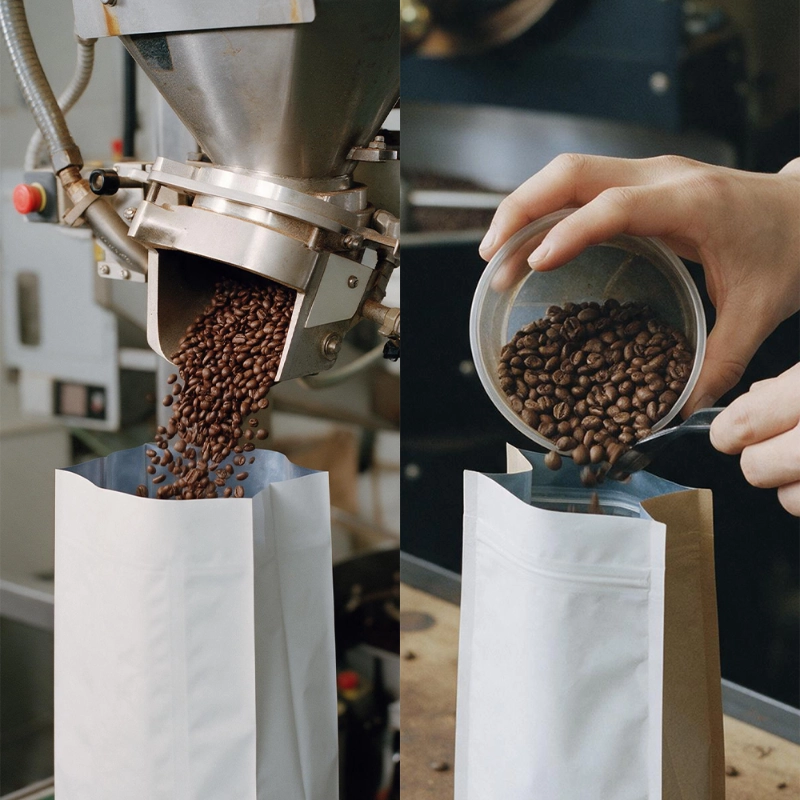
Batch size shapes the machine; the machine and your packing method together set bag format, mouth opening, standing stability and heat-seal window. A format that samples perfectly can still seal badly at production speed. We size against the filling method, not against a catalogue.
03 What does your roast curve do to the valve?
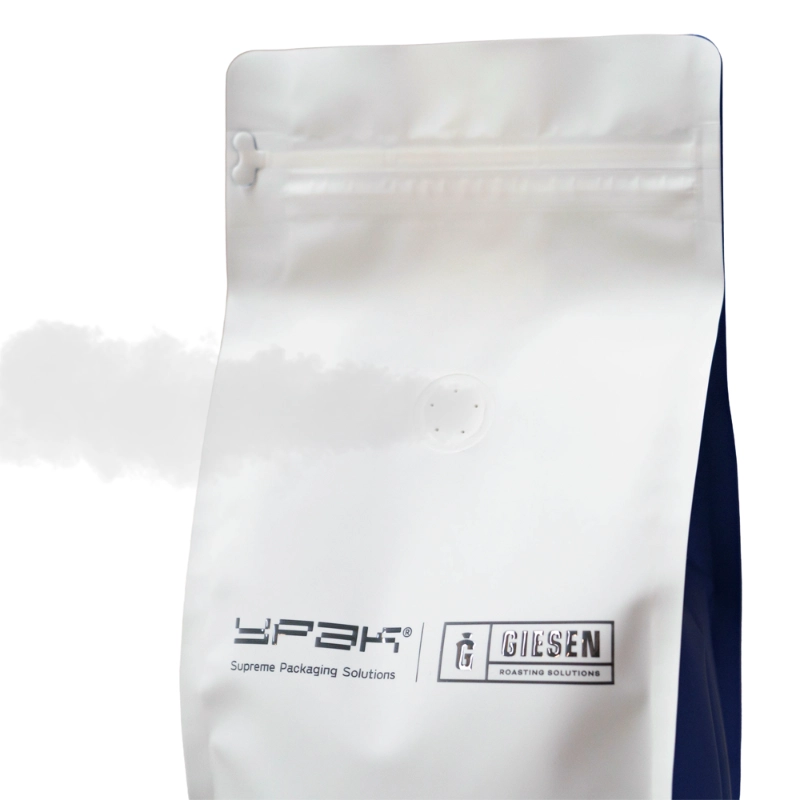
Gas release is not a constant. A dark roast with a long development phase degasses differently from a light, dense one, and a valve that performs on one may sit too tight or bleed too readily on the other. Valve opening pressure, valve area and valve position all follow the coffee — not the other way round. YPAK specifies to a valve opening pressure tolerance of ±2 mbar, and works to barrier targets of OTR < 5 cc/m²/dia e WVTR ≤ 0.5 g/m²/24 hrs.
04 How fast does it leave the building?
Roast-to-ship timing decides the degassing and barrier plan. A roastery shipping within 24 hours has a different problem from one resting coffee for a week before wholesale dispatch. Packaging specified without knowing this is packaging specified twice.
From sample roaster to industrial line
The questions scale with the machine — which is exactly the range GIESEN describes for its own equipment, from handcrafted roasters to fully automated industrial systems. Packaging has to scale on the same axis.
| Your scale | What changes about the packaging |
|---|---|
| Sample roaster | Many small lots, many designs. Digital printing without plates matters more than unit price. |
| Production roaster — the class of machine used at the championship | A repeatable format, consistent valve behaviour, and a bag that runs on your filling line every day. |
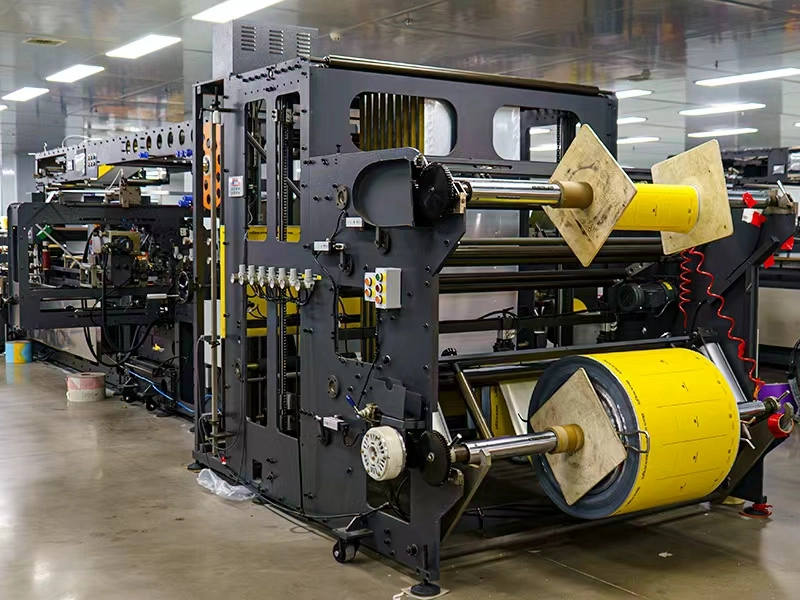
| Industrial line | The bag may stop being a bag: roll film feeding an automatic packaging line, continuous material supply, and batch-to-batch consistency become the requirements. |
Test the reasoning on your own numbers
We are not asking you to take any of this on trust. Send us your machine model, your batch sizes and your packing method, and we will show the working — dimensions, Estrutura material, Escolha de válvulas, and the reason each one was chosen. If the reasoning does not hold up on your own numbers, you have spent nothing but an email.
03 — GREATER CHINA
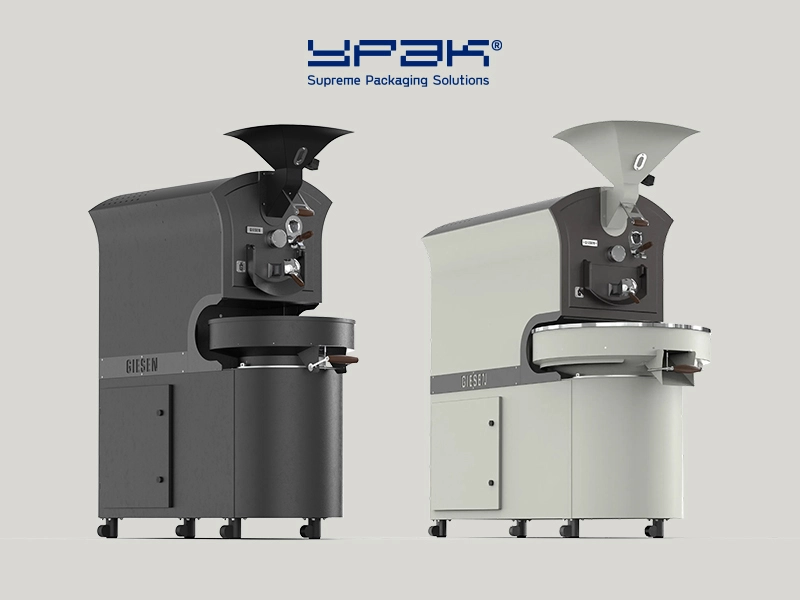
YPAK is GIESEN's general agent for Greater China
This is not a claim we are asking you to take on faith. GIESEN describes its own operating model on its website: it works worldwide through a network of trusted partners who provide local support, fast service and expert guidance. YPAK is part of that network in Greater China.
For roasteries in mainland China, Hong Kong, Macau and Taiwan, that changes who you talk to.
Machine enquiries from mainland China, Hong Kong, Macau and Taiwan
Send us your batch profile — green coffee volumes, the batch sizes across your range, your roast profiles, floor space, power and ventilation, and how much of the process you intend to run automatically. We will work through the machine and configuration question with you, and take it to GIESEN from there.
One conversation instead of two suppliers
Machine and packaging questions usually arrive in the same month. A new roaster means new batch sizes, which means new bag formats, new filling conditions and often a new valve configuration.
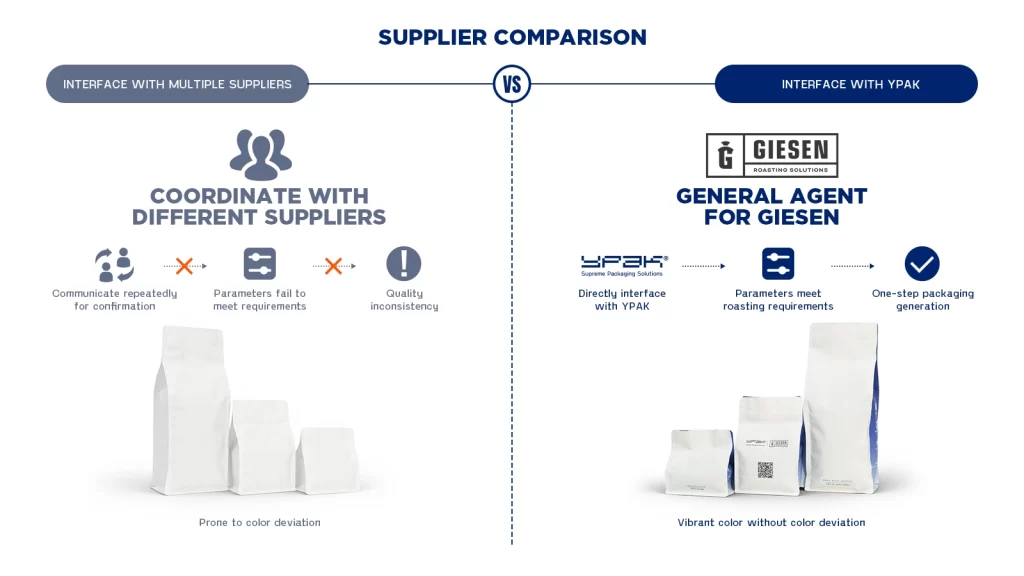
Running both sides through one partner means the specification gets settled once, against the same set of facts — instead of a bag designed without knowing the machine, and a machine installed without anyone checking how the coffee will be packed.
04 — ESPECIFICAÇÃO & SUPPLY
Um fornecedor, todos os pontos de contato.
How we specify: six steps from operating conditions to a frozen spec
We do not open with a bag format. We open with your operating conditions.
What one supplier can cover
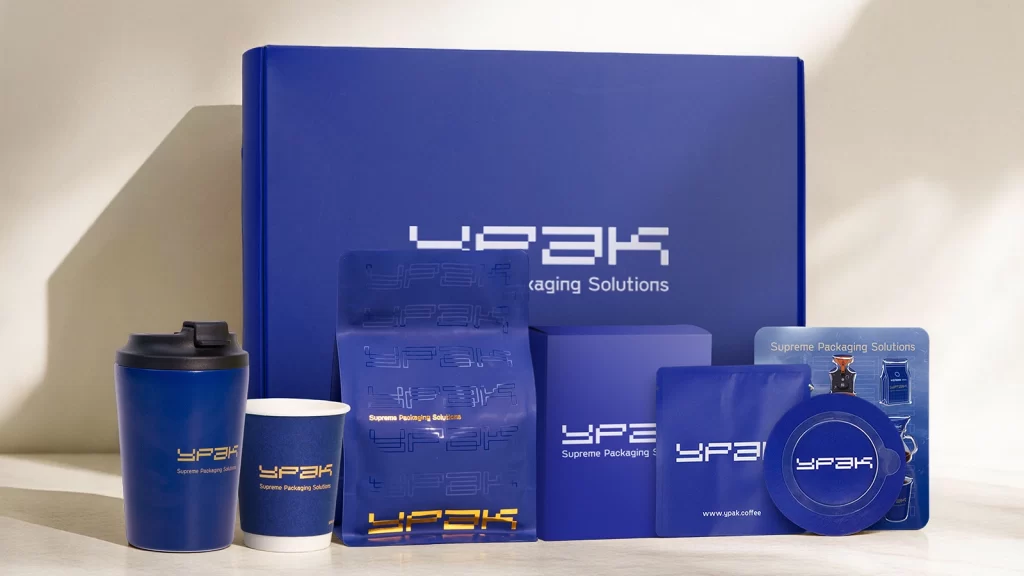
A coffee brand's packaging is never only the bean bag. YPAK produces and coordinates the whole touchpoint set around one set of brand requirements:
| Category | Escopo |
|---|---|
| Saquinhos de café | Fundo plano, eight-side-seal, stand-up, side-gusset and roll film — in mono-material recyclable, conventional laminate, PCR and degradable options |
| Drip bag packaging | Drip-bag outer pouches and the drip filter bags themselves |
| Filtros | Filter bags and filter paper |
| Cartons and gift boxes | Rigid and folding cartons, drip-bag boxes, Conjuntos de presente |
| Copos | Copos de papel, single-use drink cups, and IML in-mould-label cups |
| Insulated and ceramic | Insulated tumblers and ceramic cups |
| Components | Válvulas de desgaseificação unidirecionais, zippers and closures |
A produção nos locais de Dongguan e Foshan é gerenciada de acordo com a Segurança Alimentar e a ISO do BRCGS 22000:2018 Requisitos de certificação, com controle documentado de materiais, Monitoramento de produção, Inspeção e identificação de lotes que apoiam rastreabilidade total para embalagens em contato com alimentos. Ordens são executadas contra um 99.5% Recorde de entrega pontual.
Why the range matters
A roaster's packaging keeps moving: Novas origens, Novos métodos de processamento, new drip-bag lines, Conjuntos de presentes sazonais, a café opening that needs cups. Each new touchpoint usually means a new supplier, a new colour match and a new set of tolerances to police.
Running the whole set through one partner with one colour reference and one approval process keeps a brand recognisable across the bag, A Caixa, the drip pouch and the cup — and keeps the person managing it out of a spreadsheet.
05 — THE PRODUCT
The YPAK × GIESEN Co-Branded Bag
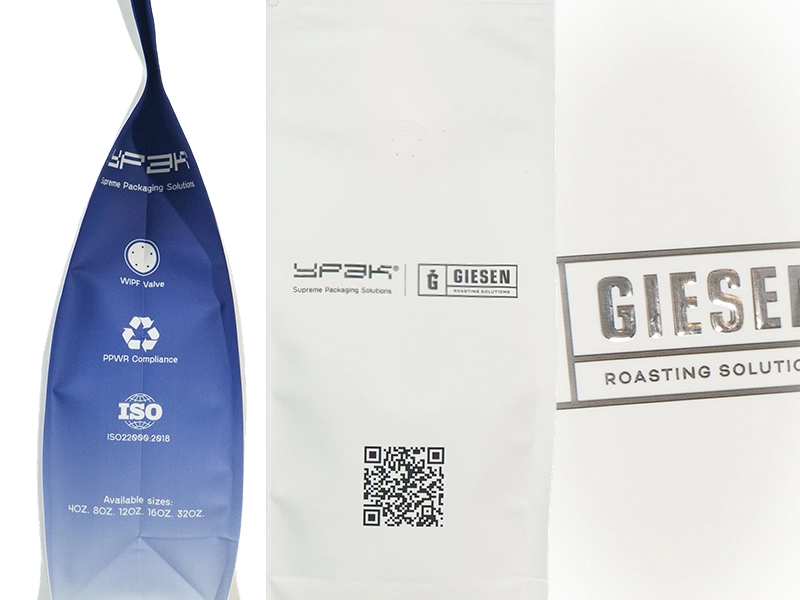
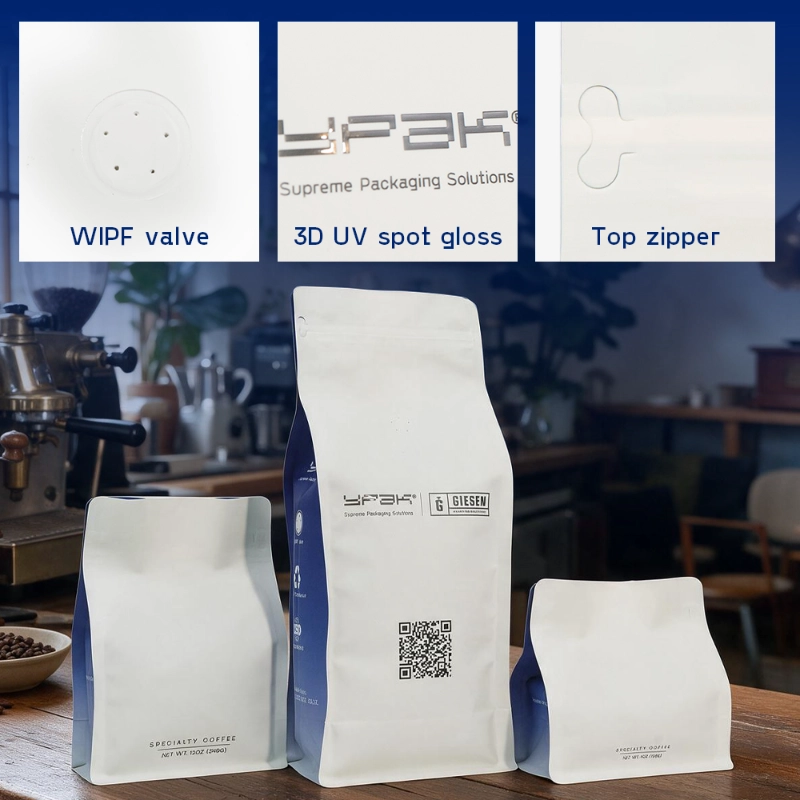
This is not an event item. O formato co-branded entrou em produção e é fornecido como embalagem para máquinas Giesen.
Structure and specification
| Estrutura | Mono-material recyclable structure option; flat-bottom pouch, stand-up pouch and side-gusset formats |
| Desgaseificação | Válvula de desgaseificação unidirecional, configured to suit the bag and its intended use |
| Acabamentos | 3D UV spot gloss, matte and soft-touch films, foil stamping and embossed logo |
| Typical capacities | 150 g / 250 g / 350 g / 500 g / 1 Histórico médico |
| Produção | Printed and converted in-house by YPAK |
How it was tested: three days, twelve roasteries
Every bag used at the Alpine Roasting Championship 2026 was made by YPAK. Twelve roasteries from six countries — Germany, Suíça, Áustria, Itália, France and Slovenia — handled the same packaging under competition conditions: filling it, Selando, and putting it on a cupping table in front of a five-person blind jury.
Para um fornecedor de embalagens, that is an unusually honest test. Nobody was handling the bag gently because it looked expensive.
06 — TWO ENTRY POINTS
Two Ways to Work With YPAK
OPTION A
Buying a Giesen machine in Greater China
You are in mainland China, Hong Kong, Macau or Taiwan, and you are choosing a roaster.
Start with your batch profile.
OPTION B
Packaging for your own brand, anywhere
You are a roaster or coffee brand anywhere in the world, and you need the bag — your own brand, your own format, your own structure — specified against your machine and your line.
Start the Conversation
Você foca no café. YPAK manages the rest.
Choosing a roaster in Greater China?Tell us your batch profile and what you are trying to achieve.
Need packaging for your own brand?Tell us what you are packing, how you fill it, and where it ships.
When making an inquiry, please provide the machine model, Capacidade, estimated quantity per design, target delivery date, and photos of existing packaging or design reference images.
Perguntas Frequentes
Monte sua bolsa e peça um orçamento
Monte sua bolsa e peça um orçamento