

Atualizado 4 Meses atrás
PPWR da UE 2026: Guia de Sobrevivência da Proibição de PFAS para Torrefadores
ypak.coffee
YPAK PACKAGING GROUP foi fundada em 2011 e formou com 3 empresas sediadas em Hong Kong, Dongguan e Foshan. Nos tornamos um dos maiores fabricantes de saquinhos de café da China. Usamos as melhores válvulas WIPF da Suíça para manter seu café fresco.
Conforme-se à política de proibição de plásticos imposta a muitos países diferentes, Pesquisamos e desenvolvemos as sacolas de embalagem sustentável, como sachês RECICLÁVEIS e COMPOSTÁVEIS.
Sem quantidade mínima, não é necessário uso de placas coloridas com nosso serviço de impressão digital HP 25K INDIGO.
Você é bem-vindo para visitar o YPAK.
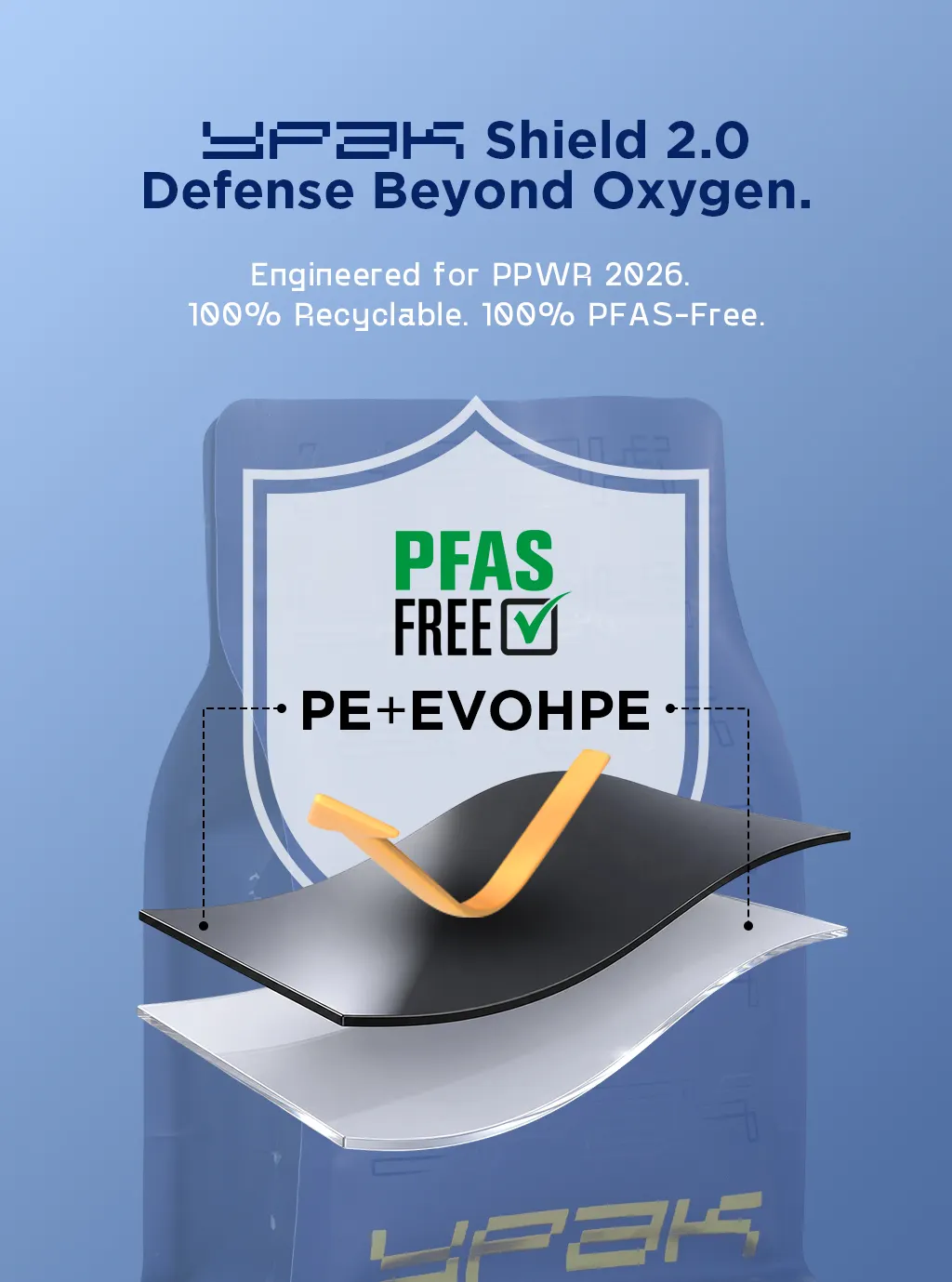
Embalagens de café sem PFAS
Introdução: O prazo inegociável de agosto 12, 2026
Para marcas de café de especialidade que operam dentro ou exportam para a União Europeia, O calendário se tornou um roteiro tático. Não estamos mais discutindo iniciativas voluntárias de sustentabilidade; Estamos enfrentando uma barreira regulatória rígida. De acordo com as últimas emendas do Regulamento da UE sobre Embalagens e Resíduos de Embalagens (PPWR), qualquer embalagem de contato alimentar colocada no mercado da UE deve ser verificada como Livre de PFAS (Para- e Substâncias Alquiladas Polifluoradas) em agosto 12, 2026.PFAS, frequentemente dublados "Produtos químicos para sempre," historicamente foram os cavalos de batalha invisíveis da indústria de embalagens, Proporcionando resistência à gordura e barreiras contra umidade. Contudo, com o início de inspeções alfandegárias intensificadas e auditorias de varejo em toda a UE, A ausência de conformidade verificada não é mais apenas uma falha ambiental — é um risco catastrófico para os negócios. Marcas que não possuem um rastro transparente de conformidade enfrentam exclusão imediata do mercado, penalidades financeiras severas, e danos irreversíveis ao valor da marca.
Seção 1: A crise invisível dos PFAS Escondida nos seus saquinhos de café
Um equívoco comum entre os torradores é que o café — ser seco, Produto torrado — não exige a resistência agressiva à gordura que as embalagens de fast-food exigem. Contudo, A realidade da engenharia de laminados de alto desempenho revela uma história diferente.
1. A Armadilha de Forro Laminado
Em estruturas tradicionais de múltiplas camadas (como PET/AL/PE ou PET metalizado), Os PFAS são frequentemente utilizados como auxílios de processamento ou revestimentos funcionais para aumentar a tensão superficial e a resistência à umidade. Mesmo que não tenha sido adicionado intencionalmente como barreira principal, a contaminação cruzada na fabricação de filmes não especializados pode levar a níveis detectáveis que não cumprem os rigorosos limites da UE.
2. O Ponto Cego: A Válvula de Desgaseificação
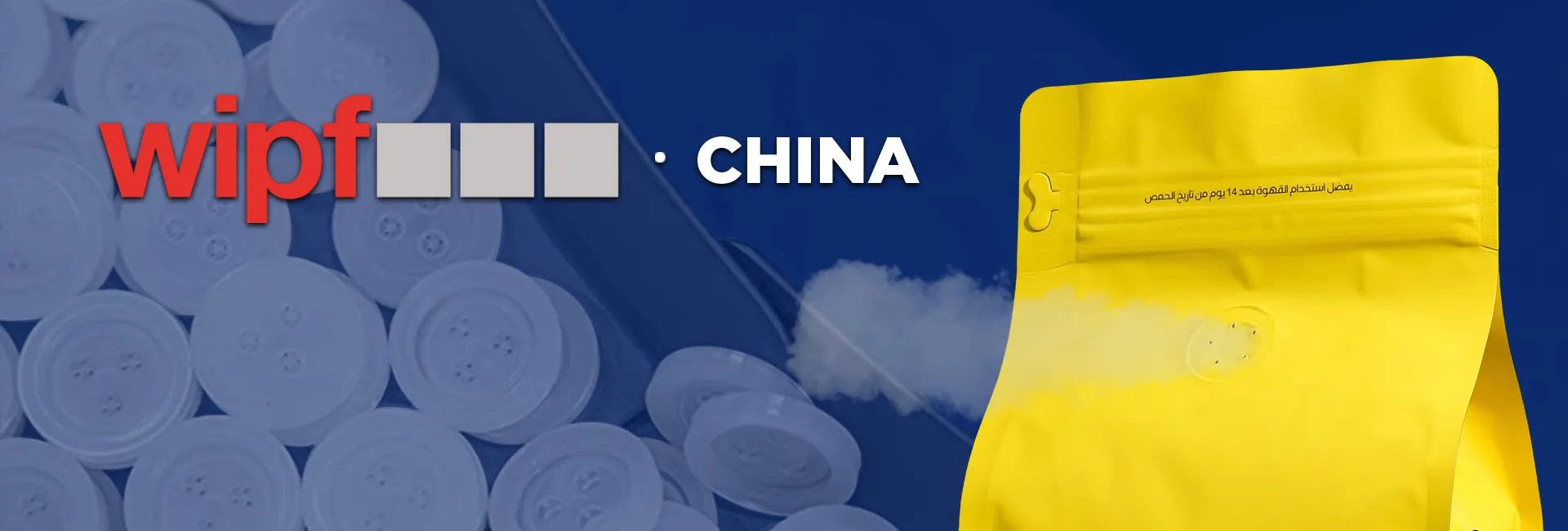
Essa é talvez a falha mais perigosa para muitas marcas. A válvula de desgaseificação unidirecional é um componente mecânico complexo. Historicamente, muitos fabricantes de válvulas utilizavam borrachas fluoradas ou lubrificantes contendo PFAS para garantir um funcionamento mecânico suave e vedação hermética. Sob o novo arcabouço do PPWR, Uma única válvula não conforme pode tornar ilegal um carregamento inteiro de café de especialidade.
3. Detecção de Alta Precisão: Sem espaço para "Quantidades Traço"
Órgãos reguladores europeus melhoraram significativamente suas capacidades analíticas. Com o limite de detecção de métodos (MDL) agora chegando tão baixo quanto 0.01 mg/kg para substâncias específicas, qualquer "Legado" Produtos químicos na sua cadeia de suprimentos serão sinalizados. A transição do YPAK para a fabricação total livre de PFAS resolve isso em nível molecular.
Seção 2: Decodificação PPWR – De "Reciclável" Para "Projeto para Reciclagem" (DfR)
O PPWR é uma mudança estrutural abrangente que vai muito além de uma única proibição de produtos químicos. Ela reclassifica fundamentalmente as embalagens com base em seu Potencial de Economia Circular.
O 2026 Penhasco de Conformidade: A prioridade imediata é a proibição obrigatória de PFAS e auditorias de resíduos de metais pesados.
O 2030 Mandato de Escalabilidade: Por 2030, Todas as embalagens não devem ser apenas tecnicamente recicláveis, mas também recicláveis em grande escala. Isso sinaliza efetivamente o fim do caminho para o papel alumínio tradicional (Para o) Laminados.
O Sistema de Classificação (DfR): EPR futuro (Responsabilidade Estendida do Produtor) As taxas serão "Eco-modulado." A embalagem será classificada de A a E. Laminados multimateriais (como PET/AL/PE) projeta-se que caia para o Grau D ou E, Incorrendo em maciça "Impostos sobre plástico" e taxas ambientais que vão corroer as margens dos torrefadores.
Seção 3: Resposta Estratégica do YPAK – O Poder da Verificação por Terceiros
Em uma era de "Greenwashing" e alegações ambientais vagas, A estratégia do YPAK é ancorada na Certeza Técnica. Não pedimos que confie na nossa palavra; Pedimos que confiem nos dados.
1. O SGS 430-Triagem de Substâncias
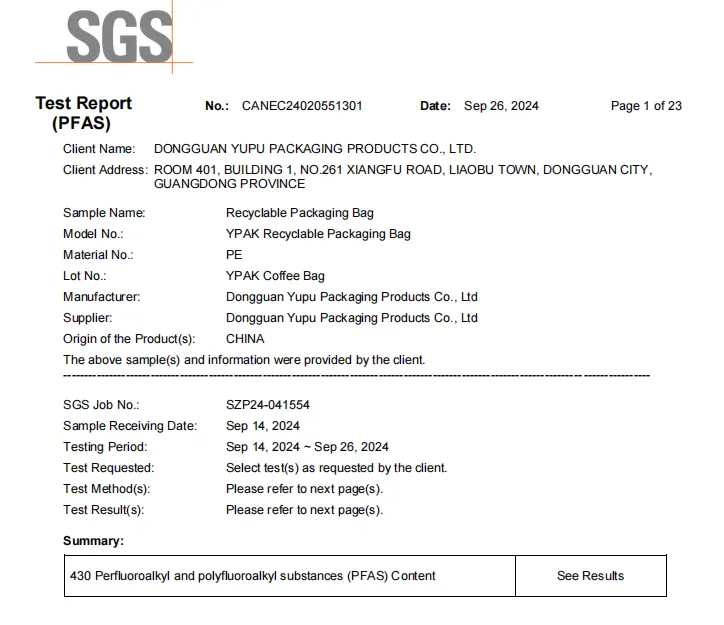
De acordo com nosso último Relatório do Laboratório SGS (Não: CANEC24020551301), As estruturas recicláveis mono-PE da YPAK passaram por um processo abrangente "Alta Resolução" escanear. Fizemos uma triagem para 430 substâncias PFAS distintas, incluindo PFOA, PFOS, e seus precursores. Os resultados confirmaram que nossos materiais estão seguramente abaixo dos limites detectáveis, garantindo total conformidade com o 2026 Mandato.
2. Conformidade Global de Segurança Alimentar
Simultaneamente, Nossas estruturas passaram pelos rigorosos testes de migração exigidos por (EC) Não 1935/2004 e (NÓS) Não 10/2011 (Relatório SGS Nº: CANEC24020556101). Isso garante que, enquanto cumprimos as regras ambientais, Nunca comprometemos a pureza sensorial do seu café.
Seção 4: A Revolução da Barreira – O Mono-PE Pode Realmente Substituir o Alumínio?
A maior preocupação para torradores é a vida útil. "Se eu remover o papel alumínio, Meu café vai ficar fresco?"
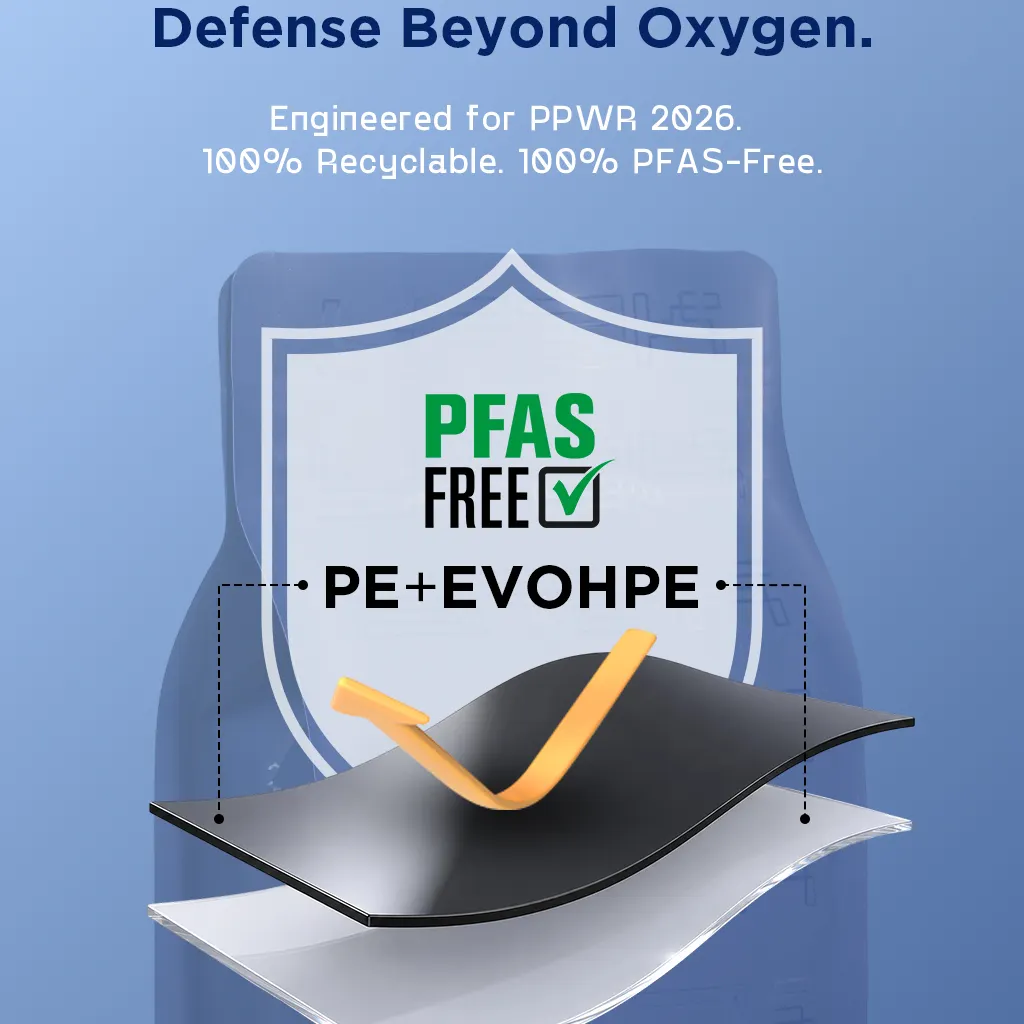
O YPAK criou um "Escudo Tríplice" Sistema monomaterial para resolver esse dilema:
PE/EVOH Coextrudado Avançado: Utilizando álcool vinílico de etileno de alta barreira (EVOH) coextrudido dentro de um polietileno de polímero único (OU) Estrutura, alcançamos as Taxas de Transmissão de Oxigênio (OTR) que rivalizam com os laminados tradicionais de alumínio. A Integração de Válvulas WIPF: Padronizamos o uso de válvulas WIPF fabricadas na Suíça para nossos 2026 Série de conformidade. Essas válvulas não são apenas livres de PFAS, mas também projetadas para compatibilidade mecânica dentro do fluxo de reciclagem de plásticos (Compatível com PE).
Seção 5: O "Anti-Greenwashing" Checklist – Como Verificar Seu Fornecedor
No atual mercado caótico, Muitos fornecedores afirmam "Conformidade" Sem a papelada para comprovar isso. Aconselhamos os torrefadores a seguirem essa auditoria em 3 etapas:
Verificação do Escopo: Consulte o Diretório BRCGS. Seu fornecedor realmente possui um certificado de fabricação para embalagens de alimentos, ou são apenas intermediários de negociação?
Cadeia de Custódia GRS: Se você está fazendo marketing de PCR (Reciclado Pós-Consumidor) Conteúdo, exigir um Certificado de Transação (TC) para o seu lote específico.
Auditar o MDL: Olhe para o "Limite de Detecção de Métodos" nos relatórios de PFAS do seu fornecedor. O YPAK utiliza os algoritmos de teste mais granulares disponíveis na SGS para garantir verdadeira segurança.
Seção 6: Adoção Precoce como Vantagem Competitiva (A Vantagem do EPR)
Navegar pela Europa exige mais do que química limpa; Requer alinhamento legal. O YPAK tem sido um participante proativo no EPR europeu (Responsabilidade Estendida do Produtor) sistemas desde 2022, com registros ativos na Alemanha, França, e Espanha.
Conclusão: Transformando a Conformidade em Premiumização de Marca
A PPWR e a proibição do PFAS não devem ser vistas como um "Custo de fazer negócios." Eles são uma oportunidade para reposicionar sua marca. Em um mercado onde os consumidores estão cada vez mais cautelosos com produtos químicos escondidos, Ser livre de PFAS, Reciclável, e a marca compatível com EPR é um diferencial poderoso de marketing.
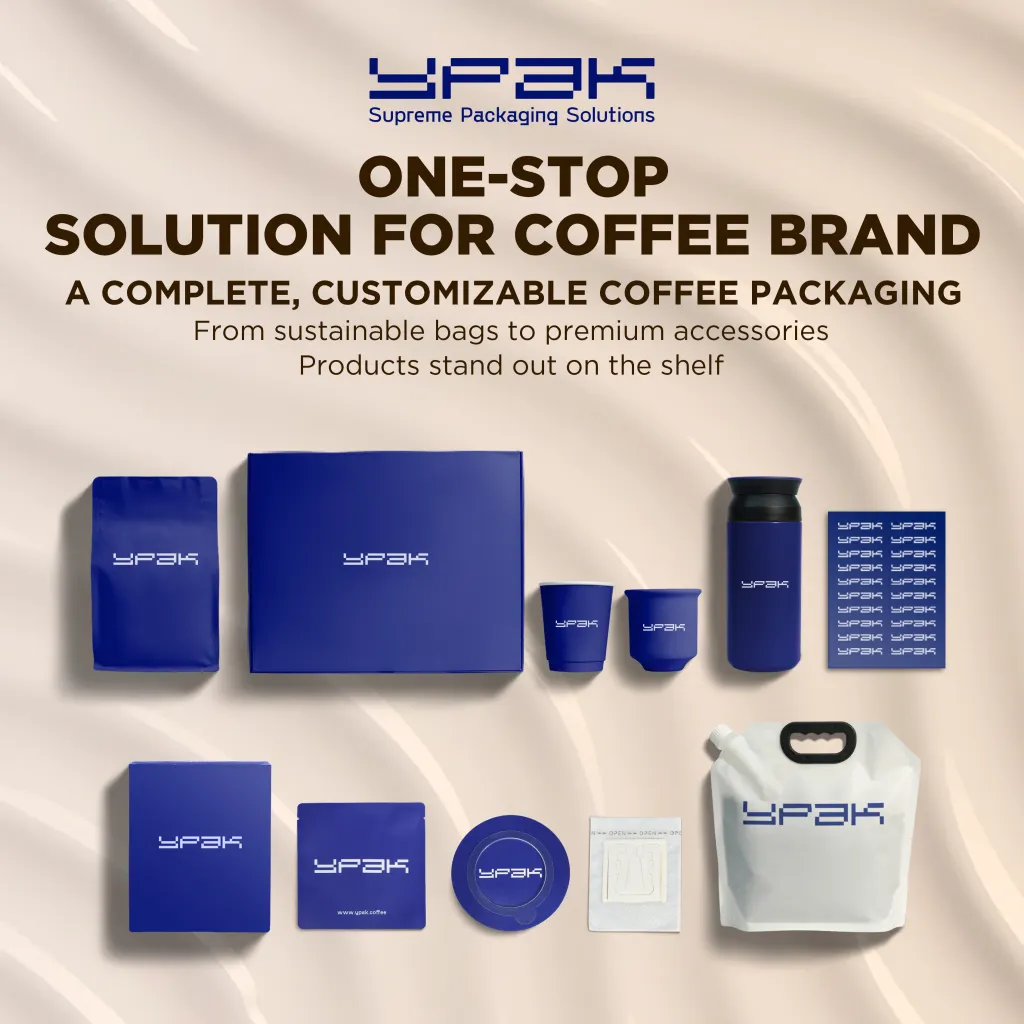
No Mundo do Café Bruxelas (Booth 6654), O YPAK está mostrando o futuro dessa transição. De soluções de papel revestido aquoso a 100% Sacolas recicláveis de fundo plano, Estamos fornecendo as respostas para as perguntas mais urgentes do setor. Sua jornada de compliance começa aqui: Entre em contato com Sam@ypak.coffee para solicitar nossa 2026 Whitepaper de Conformidade PPWR e agende sua Auditoria de Materiais Gratuitos hoje mesmo.
Escrito por
ypak.coffee
YPAK
YPAK PACKAGING GROUP foi fundada em 2011 e formou com 3 empresas sediadas em Hong Kong, Dongguan e Foshan. Nos tornamos um dos maiores fabricantes de saquinhos de café da China. Usamos as melhores válvulas WIPF da Suíça para manter seu café fresco.
Conforme-se à política de proibição de plásticos imposta a muitos países diferentes, Pesquisamos e desenvolvemos as sacolas de embalagem sustentável, como sachês RECICLÁVEIS e COMPOSTÁVEIS.
Sem quantidade mínima, não é necessário uso de placas coloridas com nosso serviço de impressão digital HP 25K INDIGO.
Você é bem-vindo para visitar o YPAK.
Artigos Relacionados
YPAK no World of Coffee Panama 2026: Embalagem de Café para Tiragens Curtas e Lotes Destinados à UE
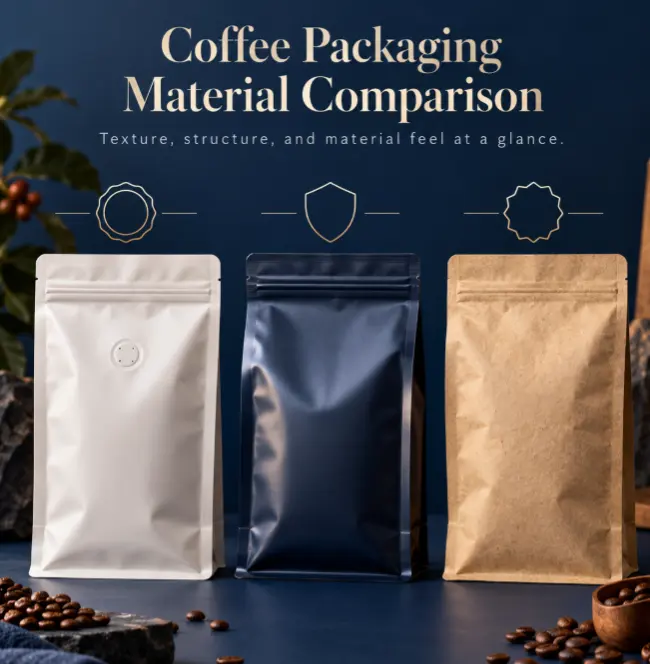
Graus de reciclabilidade PPWR para embalagens de café: O que Sobrevive 2030, e O Que Sobrevive 2038
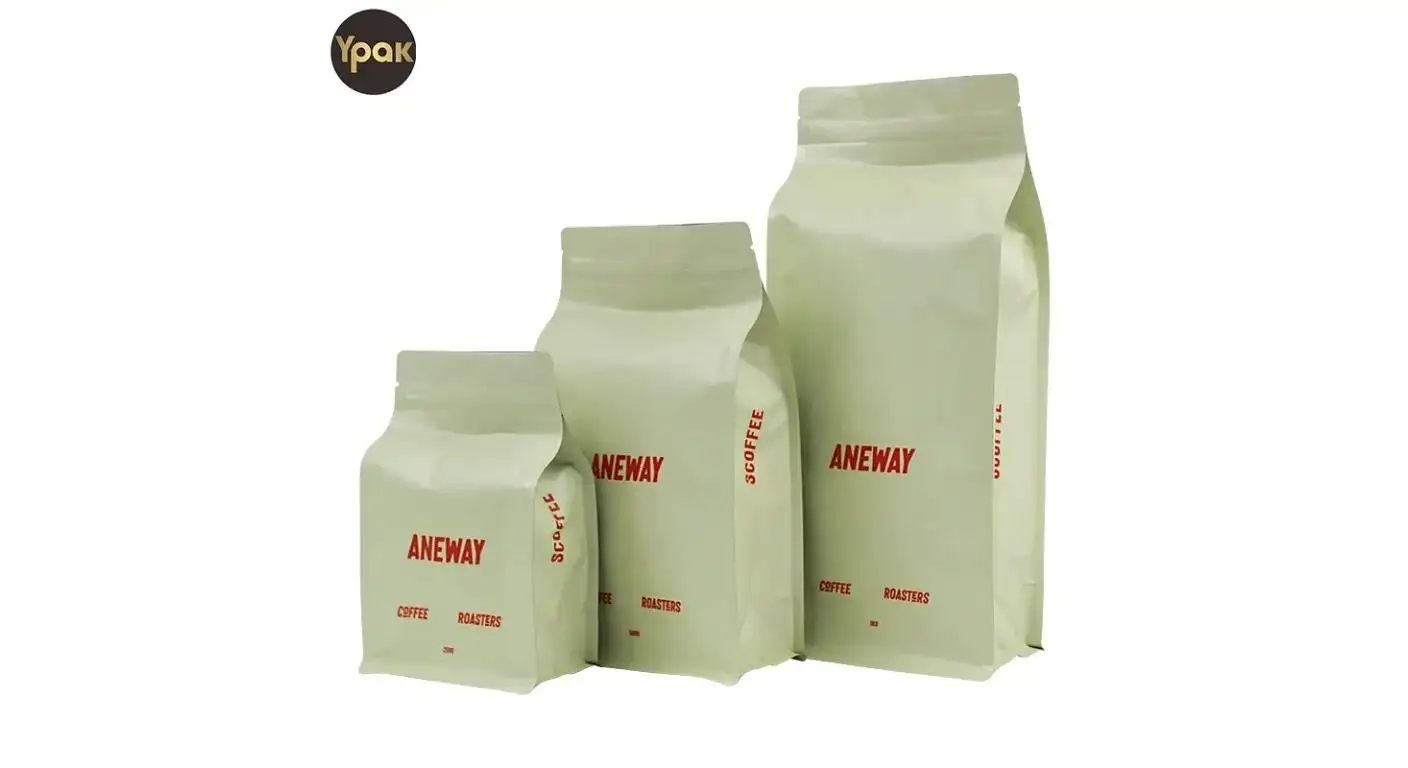
Soluções Personalizadas de Embalagem de Café: De ideias de produtos a embalagens prontas para o mercado